
Regular Scheme · BPJPH Indonesia

Halal Certification Assistance A personal approach, for confidence in your halal compliance.

We guide overseas manufacturers and their Indonesian importers through BPJPH halal requirements, from the first consultation until the certificate is issued.

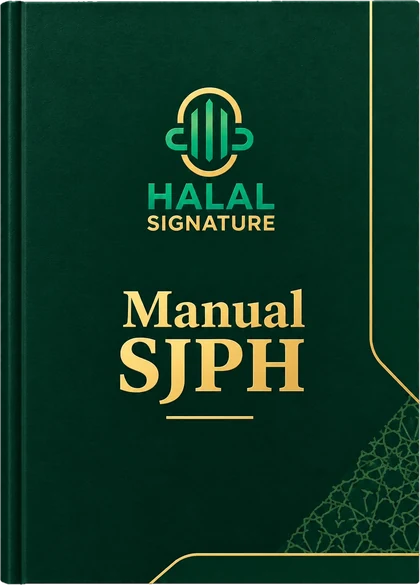
Signature Halal's Halal Product Assurance System (SJPH) manual
Regular Scheme BPJPH

Verified, audited, then decided.

Legal basis
Law No. 33 of 2014
Audit
Accredited LPH
Halal ruling
MUI Fatwa Hearing
Stages
8 steps

Track record

Businesses assisted
31
Halal certificates issued
24
Provinces in Java & Sumatra
6
Median time to issuance
±4 weeks

Data as of September 2026. Figures reflect our past engagements and are not a guaranteed timeline.

For Overseas Companies

Where you stand in Indonesia's halal process.

Products made outside Indonesia are covered by the same halal obligation once they enter the Indonesian market. First, the product needs a halal certificate or registration number through one of two routes, depending on whether it already holds a halal certificate that Indonesia recognises. Then, before shipment, the imported products go through a conformity assurance.

Route 1

Register your existing halal certificate

For products already certified by a foreign halal body that has a mutual recognition arrangement with BPJPH, and whose recognised scope covers your product category.

  • No new certification is required in Indonesia.
  • The foreign certificate must be registered with BPJPH through SIHALAL before the product is distributed.
  • The registration number is shown on the packaging next to the halal label.

Route 2

Obtain Indonesian halal certification

For products without a halal certificate, or certified by a body that BPJPH does not recognise for that product category.

  • The application goes to BPJPH through SIHALAL, under the regular scheme.
  • A Halal Inspection Body (LPH) audits your materials, process, and facility.
  • Halal status is decided in a fatwa hearing, then BPJPH issues the certificate.
See the 8 steps

Then, before shipment

Update, 17 October 2026: the government announced that BPJPH Regulation No. 4 of 2026, described below, will be revoked as part of the amendment to Government Regulation No. 42 of 2024. Mandatory certification for imported food, beverages, and slaughtered products now starts on 18 October 2028. Please check with us before planning a shipment.

Halal Product Conformity Assurance for imported products

Holding a certificate or registration number is the first half. Under BPJPH Regulation No. 4 of 2026, imported products also go through a conformity assurance: an administrative verification and a limited physical check that the shipment matches its halal certificate or registration number, its halal label or non-halal information, the import documents, and Indonesia's halal product assurance rules. The importer applies; the check takes place in the country of loading.

  1. 01

    Prepare the requirements

    The importer confirms that the product holds a valid halal certificate or foreign halal certificate registration, then prepares:

    • NIB serving as the importer identification number (API)
    • Halal certificate or registration number
    • List of products to be imported, with HS codes
    • Power of attorney from the importer
    • Tax ID (NPWP)
    • Purchase note or product order list
    • Statement on the accuracy of the documents
  2. 02

    Apply through SIHALAL

    The importer submits the application to the Head of BPJPH through SIHALAL (ptsp.halal.go.id) with the required documents, then selects an Inspection Body designated by BPJPH.

  3. 03

    Verification and payment

    The Inspection Body verifies and validates the documents. Incomplete files are returned to the importer. Once complete, the Inspection Body calculates the fee, BPJPH issues the invoice, and the importer pays it in full.

  4. 04

    Inspection in the country of origin

    After payment, the Inspection Body informs the importer and/or exporter of the schedule. The check is carried out in the country of loading or origin, and can be done directly at the loading warehouse before shipping. Documents are compared with the physical goods, including:

    • Data and documents; product type
    • Halal certificate, registration, or non-halal information
    • HS code, product volume, product code and date
    • Halal label
    • Contamination risk
    • Conformity of slaughtered meat
    • Validation of the foreign halal certificate and the foreign halal body
  5. 05

    The LPPH report is issued

    The result is set out in a Halal Product Conformity Report (LPPH), submitted to the Head of BPJPH through SIHALAL, where the importer can download it.

  6. 06

    LPPH as a customs document

    The LPPH is attached to the import customs declaration.

Source: BPJPH, process flow for Halal Product Conformity Assurance of overseas products (BPJPH Regulation No. 4 of 2026, Article 1). Unofficial English summary.

Who does what

As the overseas manufacturer you own the product and its halal status, but you do not file alone. Applications are made through an Indonesian entity.

You, the manufacturer
Provide product, material, and process information; keep halal assurance running at your facility; appoint your Indonesian importer or representative in writing; give the Inspection Body access to the goods at the loading warehouse before shipment.
Importer or official representative in Indonesia
Holds an Indonesian business licence (NIB), submits the application or registration through SIHALAL on your behalf, applies for the conformity assurance, pays the invoice, and uses the LPPH for customs.
Inspection Body
Designated by BPJPH. Verifies the documents, checks the goods in the country of loading, and issues the LPPH.
Foreign halal body
Route 1 only. Issues the halal certificate in your country under its recognition arrangement with BPJPH.
BPJPH
The Indonesian government agency. Registers recognised foreign certificates (Route 1), issues Indonesian halal certificates (Route 2), designates Inspection Bodies, and issues the invoice for the conformity assurance.
LPH and MUI
Route 2 only. The Halal Inspection Body audits; the MUI fatwa hearing decides the halal status.
Signature Halal
Your assisting consultant in Indonesia. In the free initial consultation we help you identify which route applies; for Indonesian certification we prepare the documents and accompany you and your importer through every step.
General information as of October 2026, not legal advice. Products that are not halal may still be imported, provided they carry clear non-halal information. The list of recognised foreign halal bodies and the detailed registration requirements are set by BPJPH and change over time; please confirm the current rules on the official BPJPH website or with us before you proceed.

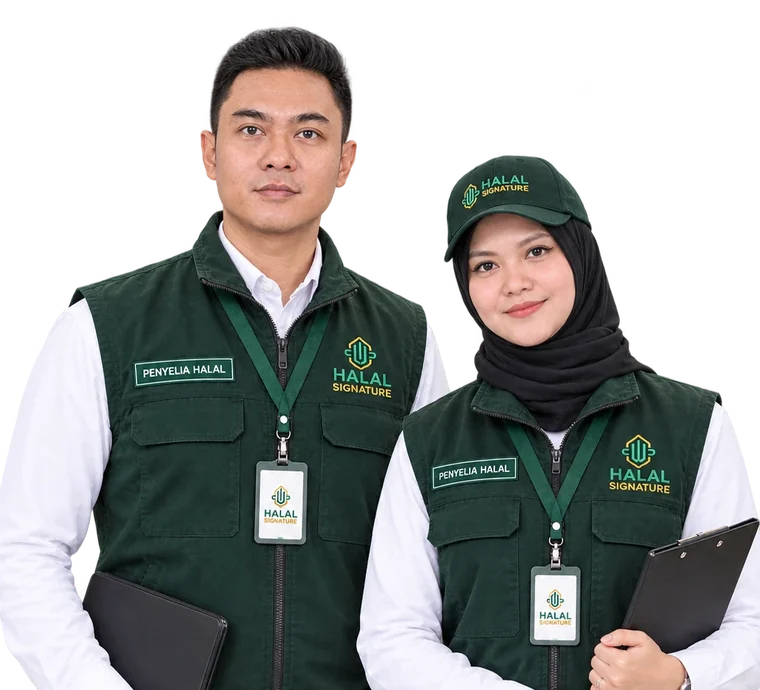
Two Signature Halal supervisors in uniform vests and ID cards, holding a tablet and a document board
Signature Halal's halal supervisor team.
About Us

A partner who understands your business.

PT Signature Halal Indonesia is a Jakarta-based consultancy that assists businesses through BPJPH halal certification under the regular scheme, from application to certificate issuance, with an approach tailored to the scale of each business:

  • Micro/Small
  • Medium
  • Large
  • Overseas
  • Personal

    Our assistance follows the realities of your business, not a one-size-fits-all package.

  • Cross-sector

    From food and cosmetics to chemical products and consumer goods.

  • Transparent

    Every stage is communicated until the certificate is issued.

Our role is clear. Halal certificates are issued by BPJPH (Indonesia's Halal Product Assurance Organizing Agency). Audits are carried out by a Halal Inspection Body (LPH), and halal status is decided in an MUI fatwa hearing. Signature Halal is the consultant that prepares your documents and accompanies you at every stage.

Our Service

Halal certification, end to end.

BPJPH regular scheme, from the first consultation until the certificate can be downloaded from SIHALAL, the official BPJPH system.

  • Gap analysis
  • SJPH documents
  • BPJPH registration
  • LPH audit
  • Fatwa hearing
Request an estimate

SJPH documentation

We prepare the Halal Product Assurance System (SJPH) manual, the material list with supporting documents, and the production flow chart.

SJPH implementation

We help put the system into practice at your facility so that it is ready for the audit.

Audit follow-up

We handle revisions and corrective actions for the findings raised by the Halal Inspection Body (LPH).

Internal training

We train your team to run the SJPH after the certificate is issued.

Products and businesses covered

  • Food & beverages
  • Restaurants & catering
  • Production kitchens
  • Slaughterhouses
  • Raw materials & food additives
  • Cosmetics
  • Medicines
  • Chemical products
  • Consumer goods
  • Services
How It Works

8 steps to halal certification.

From the first consultation until the certificate can be downloaded from SIHALAL.

  1. 01

    Initial Consultation

    We discuss your needs, check your business licences, and identify materials and processes.

  2. 02

    SJPH Documents

    SJPH manual, material list, and production flow chart.

  3. 03

    BPJPH Registration

    Application through SIHALAL and selection of the LPH.

  4. 04

    Document Verification

    Completeness check before the audit is scheduled.

  5. 05

    On-site Audit

    The LPH inspects materials, processes, equipment, and storage.

  6. 06

    Corrective Actions

    Follow-up on audit findings with supporting evidence.

  7. 07

    MUI Fatwa Hearing

    MUI decides the halal status of the product.

  8. 08

    Certificate Issued

    BPJPH issues the certificate, ready to download from SIHALAL.

Clients receive a progress code and can follow their current stage at any time on our progress page (in Indonesian).

Halal Regulation

Why do products need halal certification?

Because Indonesian law requires it, in phases according to product type and business scale.

“Products that enter, circulate, and are traded in the territory of Indonesia must be halal certified.”
Law No. 33 of 2014, Article 4 (unofficial translation)

Food, beverages, slaughtered products, and slaughtering services

  • Medium & large businesses

    Already in force

    The phase-in period ended on 17 October 2024.

  • Micro & small businesses

    Extended to 2028

    The phase-in period now ends on 17 October 2028.

  • Overseas products

    From 18 October 2028

    Aligned with mutual recognition agreements on halal certificates.

Also extended to 17 October 2028

Cosmetics, traditional medicines, supplements, chemical products, and many consumer goods, for all business scales.

If a product is not yet certified

Administrative sanctions, ranging from a written warning to withdrawal of the product from circulation.

Legal basis: Law No. 33 of 2014 as amended by Law No. 6 of 2023, and Government Regulation No. 42 of 2024. The extension to 2028 was announced by the government on 17 October 2026 and is set out in an amendment to Government Regulation No. 42 of 2024. Summary as of 21 October 2026 for general information only; the official references are available on the BPJPH website.

Credentials

A registered company, a certified halal supervisor.

All numbers below can be verified with the issuing institutions.

Company registration

PT Signature Halal Indonesia

Business Identification Number (NIB)
2509260053022
Ministry of Law decree
AHU-A125559.AH.01.30.Tahun 2026
Tax ID (NPWP)
1000 0000 1134 4476
Business classification (KBLI)
70209 · Management consulting

Professional competence

Halal Supervisor · Irwan

BNSP Certificate of Competence
74909 3122 0002933 2024
Registration No.
PHI 1957 01101 2024
Field
Halal Product Assurance
Halal Supervisor training certificate
3054/PH.073/IHB.VIII/2024

BNSP is Indonesia's National Professional Certification Authority. The certificate was issued through LSP Halal Indonesia.

Consultation

Start with a conversation, not with paperwork.

Tell us about your products and your business. The initial consultation is free of charge, and enquiries in English are welcome.

WhatsApp / Phone
+62 813-4364-0048
Office
Jl. Galur Selatan No.24, Johar Baru, Central Jakarta 10530, Indonesia